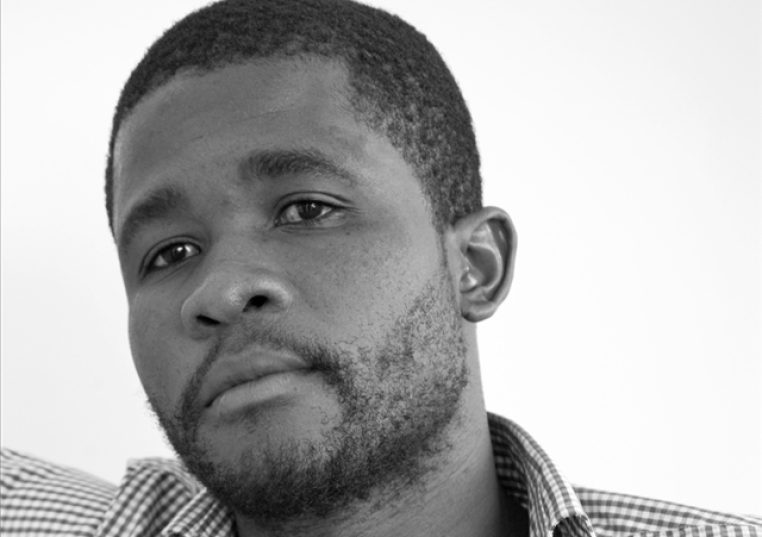
Thabiso Sekgala (1981 – 15 October 2014) was a South African photographer. His work was about “land, peoples’ movement, identity and the notion of home”. Sekgala’s photography was published in a book, Paradise (2014) and exhibited posthumously at the Hayward Gallery in London. Sekgala was born in Soweto, a township in the suburbs of Johannesburg. He was raised by his grandmother in a settlement near Hammanskraal, in what was then the rural Bantustan (or “homeland”) of KwaNdebele, 40 km north of the city of Pretoria. He studied photography at Market Photo Workshop in Johannesburg from 2007 to 2008. His photographs were, in the words of Hannah Abel-Hirsch writing in the British Journal of Photography, “united by their exploration of the notion of home, and the social, political, or economic conditions that may shape our relationship to it.” In 2012 Sekgala and Philippe Chancel “travelled to Magopa to investigate the problem of contemporary restitution of land in the so-called Black Spots, from which black South Africans were expelled under the apartheid-era “forced removals” programme”. In 2013 he lived in Kreuzberg in Berlin for a year-long residency at Künstlerhaus Bethanien and undertook a two month residency at HIWAR/Durant Al Funun in Amman, Jordan. He committed suicide on 15 October 2014, aged 33, a few months after the death of his grandmother. He had a son and a daughter.