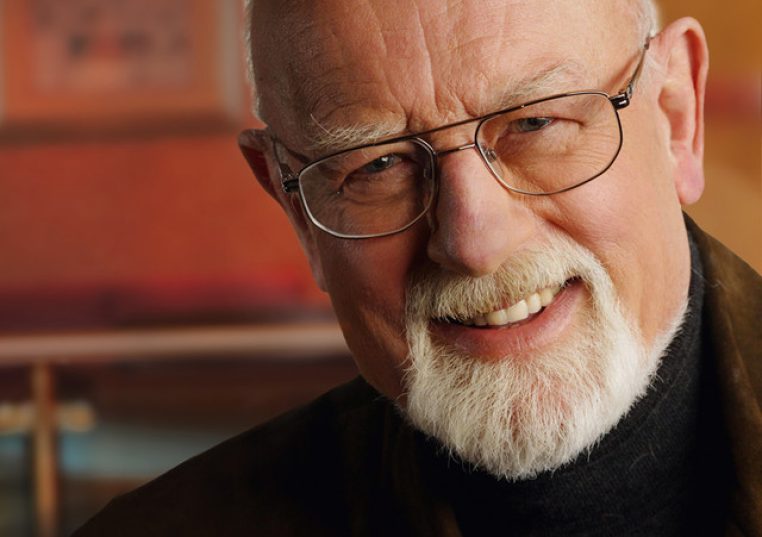
Roger Henry Brough Whittaker (22 March 1936 – 13 September 2023)[3] was a British singer-songwriter and musician.[4] His music is an eclectic mix of folk music and popular songs, the latter variously in a crooning or in a schlager style. He is best known for his baritone singing voice and trademark whistling ability as well as his guitar skills. The Times observed that “[s]ome pop singers define the zeitgeist and many more follow it. A much rarer number of them defy it and Roger Whittaker counted himself proudly and unapologetically among them”.[5] Despite not having sustained chart success, he gained a large international following through TV appearances and live performances, with fan clubs in at least 12 countries (including Australia, Canada, Great Britain, New Zealand, South Africa, and the United States). One admirer was US president George H. W. Bush, at whose home he was invited to perform. Whittaker was born in Nairobi, then in British Kenya, to English parents, Vi (née Snowden) and Edward Whittaker, who were from Staffordshire, where they owned and operated a grocery shop. His father was injured in a motorcycle accident and the family moved to a farm near Thika, Kenya, because of its warmer climate. His grandfather sang in various clubs and his father played the violin. Roger learned to play the guitar.[citation needed] He was quoted as saying that all he wanted as a child were country and western gramophone records by artists such as The Carter Family and Jimmy Rogers, to which he used to sing along. Upon completing his primary education, Whittaker was admitted to Prince of Wales School (now Nairobi School), and whilst there sang in the choir at Nairobi Cathedral.[10] Upon completing his high-school education, he was called up for national service and spent two years in the Kenya Regiment fighting the Mau Mau in the Aberdare Forest.[11] He said that he was “stupid, selfish, and angry” in his youth, and that the army “made a man” out of him.[12] After demobilization in 1956, he enrolled at the University of Cape Town in South Africa to pursue a career in Medicine, performing at the Equator Club in Nairobi during breaks.[10] However, he left after 18 months and joined the civil service education department as a teacher, following in his mother’s footsteps. Whittaker moved to Britain in September 1959. to continue his teaching career[14] For the next three years, he studied zoology, biochemistry and marine biology at University College of North Wales and earned a Bachelor of Science degree while singing in local clubs,[14] and released songs on flexi discs included with the campus newspaper, the Bangor University Rag.[15] Reflecting upon this time in his life, he said later that “I guess I was an entertainer who was a biochemist for a while, rather than the other way around”. Whittaker was shortly signed to Fontana Records,[14] which released his first professional single, “The Charge of the Light Brigade”, in 1962. (On the labels of the Fontana singles, he is billed as “Rog Whittaker”.[1]) In the summer of 1962, Whittaker performed in Portrush, Northern Ireland. He achieved a breakthrough when he was signed to appear on an Ulster Television show called This and That.[14] His second single was a cover version of “Steel Men”, released in June 1962. In 1966, Whittaker switched from Fontana to EMI’s Columbia label, and was billed as Roger Whittaker from this point forward. His fourth single for the imprint was his self-composed Durham Town (The Leavin’), which in 1969 became Whittaker’s first UK Top 20 hit in the UK Singles Chart.[14] Whittaker’s US label, RCA Victor, released the uptempo “New World in the Morning” in 1970, where it became a Top 20 hit in Billboard magazine’s Easy Listening chart. That same year, his downbeat theme song “No Blade of Grass”, written for the film adaptation of the same name that was sung during both the opening and ending titles, became his first film credit. In the early 1970s, Whittaker took interest in the Nordic countries when he recorded the single “Where the Angels Tread” (Änglamarken) to the music of Evert Taube in 1972. In 1974 he performed at the Finnish Eurovision qualifications.[16] The song “The Finnish Whistler” he performed became famous in Finland as it was used as a title music for the popular Finnish Yle television cooking programme Patakakkonen. In 1976, Whittaker undertook his first tour of the United States. In 2003, he again toured Germany. After recovering from heart problems at the end of 2004, he started touring in Germany in 2005, and then in the UK from May to July.[