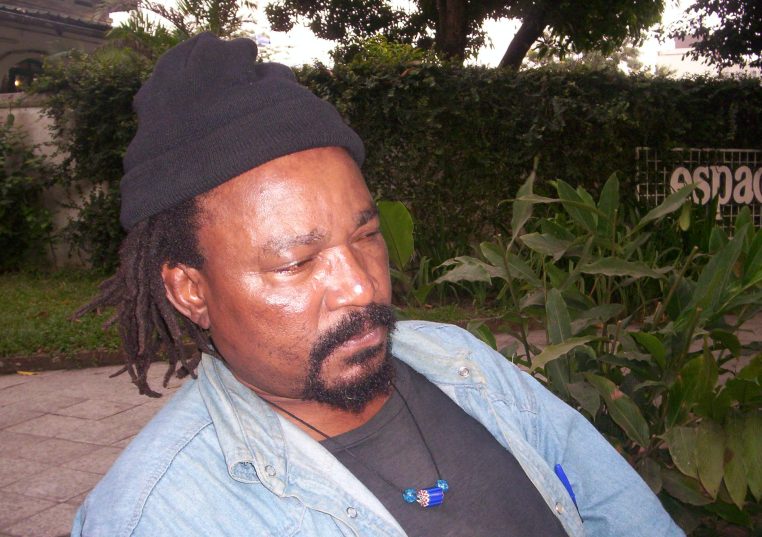
Koko Komégné is a prominent visual artist based in Douala, Cameroon, known for his contributions to contemporary art in the country. Born in 1950 in Batoufam, he relocated to Yaoundé at a young age, where he developed an interest in drawing and music. Over the years, Komégné established himself as an artist, initially focusing on sculpture and later transitioning to painting. In 1965, he moved to Douala and began his artistic journey under the guidance of amateur painter Jean Sabatier. Komégné’s early career involved reproducing artworks by renowned painters and creating advertising billboards. He gained recognition by winning the Biscuits Berlin drawing competition in 1968. His artistry extended to music, and he became the lead singer of the music group “Black Power.” Komégné’s personal artistic style evolved to encompass themes like music, dance, poverty, nightlife, and masks. He also produced scene paintings for the first Cameroonian film, “Pousse Pousse,” in 1974. His notable solo exhibitions and collaborations with various establishments, such as clubs and hotels, mark his extensive career. His signature technique involves layering embroidered images of women over abstract backgrounds, reflecting his dedication to feminist perspectives. Beyond his individual artistic endeavors, Komégné has been actively involved in promoting the arts in Cameroon. He co-founded artists’ associations like Cercle Maduta and CAPLIT, aiming to foster the visual arts community. His influence and dedication to the arts are evident through numerous interviews, radio, and TV appearances. Komégné’s contributions extend to curatorial roles and mentoring emerging artists. He has played a pivotal role in exhibitions, workshops, and cultural initiatives, showcasing a commitment to the growth of visual arts in Cameroon. His involvement in various artistic ventures has left a lasting mark on the contemporary art scene in the region.