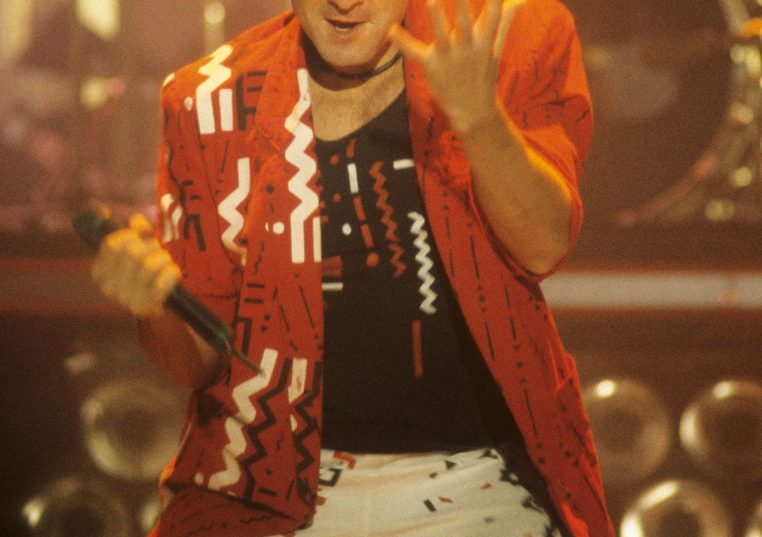
Jonathan Paul Clegg, OBE OIS (7 June 1953 – 16 July 2019) was a South African musician, singer-songwriter, dancer, anthropologist and anti-apartheid activist. He first performed as part of a duo – Johnny & Sipho – with Sipho Mchunu which released its first single, Woza Friday in 1976. The two then went on to form the band Juluka which released its debut album in 1979. In 1986, Clegg founded the band Savuka, and also recorded as a solo act, occasionally reuniting with his earlier band partners. Sometimes called Le Zoulou Blanc (French: [lə zulu blɑ̃], for “The White Zulu”), he was an important figure in South African popular music and a prominent white figure in the resistance to apartheid,[3] becoming for a period the subject of investigation by the security branch of the South African Police.[4] His songs mixed English with Zulu lyrics, and also combined idioms of traditional African music with those of modern Western styles. Clegg was born on 7 June 1953 in Bacup, Lancashire,[6] to an English father of Scottish descent, Dennis Clegg, and a Rhodesian mother, Muriel (Braudo).[7][8] Clegg’s mother’s family were Jewish immigrants from Lithuania, and Clegg had a secular Jewish upbringing, learning about the Ten Commandments but refusing to have a bar mitzvah or even associate with other Jewish children at school.[9] He moved with his mother to Rhodesia (now Zimbabwe) at age 6 months, and his parents divorced soon afterwards. At age six, he moved to South Africa with his mother,[10] also spending part of a year in Israel during his childhood. As an adolescent in Johannesburg’s northern suburbs, he encountered the demi-monde of the city’s Zulu migrant workers’ music and dance. Under the tutelage of Charlie Mzila, a flat cleaner by day and musician by night, Clegg mastered both the Zulu language and the maskandi guitar and the isishameni dance styles of the migrants.[11] Clegg’s involvement with black musicians often led to arrests for trespassing on government property and for contravening the Group Areas Act. He was first arrested at the age of 15 for violating apartheid-era laws in South Africa banning people of different races from congregating together after curfew hours. At the age of 16, he met Sipho Mchunu, a Zulu migrant worker with whom he began performing music.[10] The partnership, which they named Juluka, began in 1969,[13] and was profiled in the 1970s television documentary Beats of the Heart: Rhythm of Resistance. After graduating with a BA(Hons) in Social Anthropology from the University of Witwatersrand, Clegg pursued an academic career for four years where he lectured and wrote several seminal scholarly papers on Zulu music and dance.[11] In the early stages of his musical career, Clegg combined his music with the study of anthropology[14] at Wits, where he was influenced by the work of David Webster, a social anthropologist who was later assassinated in 1989. He preceded each song with snippets of Zulu culture, information, commentary, humor and personal anecdotes relevant and unique to that song,[11] occasionally also incorporating aspects of his Jewish roots in songs such as “Jericho”, “Jarusalema” and “Warsaw 1943”. Clegg’s song “Scatterlings of Africa” gave him his only entries in the UK Singles Chart, reaching No. 44 in February 1983 with Juluka and No. 75 in May 1987 as Johnny Clegg and Savuka. The following year the song was featured on the soundtrack to the 1988 Oscar-winning film Rain Man. His song “Life is a Magic Thing” was featured in FernGully: The Last Rainforest. Savuka’s song “Dela” was featured on the soundtrack of the 1997 film George of the Jungle and its 2003 sequel,[28] while “Great Heart” was the title song for the 1986 film Jock of the Bushveld and the end credits song for the 2000 film Whispers: An Elephant’s Tale. “Cruel, Crazy, Beautiful World” was featured in the 1990 film Opportunity Knocks and 1991 film Career Opportunities. Jimmy Buffett recorded “Great Heart” for his 1988 album, Hot Water.Johnny Clegg was diagnosed with pancreatic cancer in 2015,[41] which ultimately led to his death on 16 July 2019. He died in his Johannesburg home surrounded by loved ones and was laid to rest the following day in Westpark Cemetery in Johannesburg.[42][43] Clegg was survived by his wife, Jenny, and his two sons, Jesse (also a musician)[44] and Jaron.