Talent

download_2_pwwy1p.webp

0.000

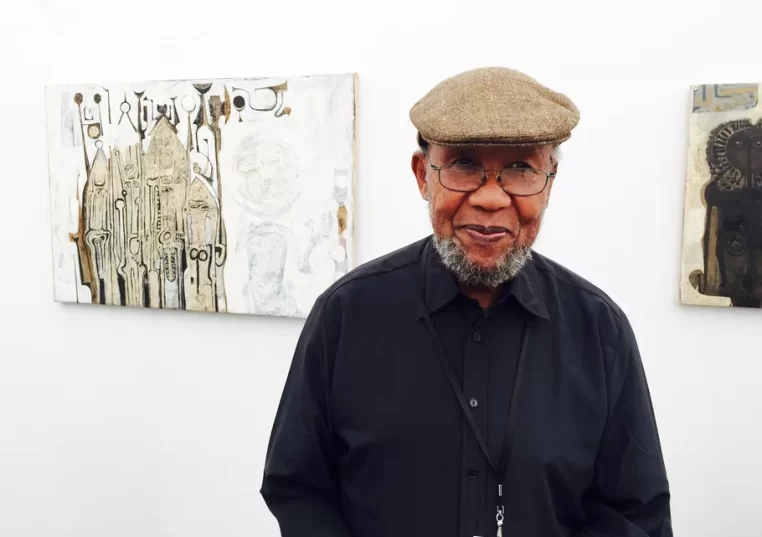
Ibrahim El-Salahi

Biography

Ibrahim El-Salahi, born on September 5, 1930, in El-Abbasyia, Sudan, is a prominent painter known for his contributions to the Khartoum School, a significant movement in African Modernism. He is also associated with the pan-Arabic Hurufiyya art movement, which merged traditional Islamic calligraphy with contemporary art forms. His work has been praised for creating a unique visual language that integrates Islamic, African, Arab, and Western artistic traditions. El-Salahi’s early life involved learning Arabic calligraphy at his father’s Qur’anic school, which later became a fundamental aspect of his artistic expression. He furthered his education in Fine Art at the Gordon Memorial College in Khartoum and later received a scholarship to attend the Slade School of Fine Art in London. This exposure to European art and modernist influences significantly impacted his artistic development. Throughout the 1960s, El-Salahi received scholarships and participated in various international cultural events, representing Sudan and contributing to the modern African art movement. He combined Arabic calligraphy with Sudanese themes, gradually incorporating symbols and inscriptions into his work to create new meanings. After completing his education, El-Salahi returned to Sudan and continued to explore the integration of European and Sudanese artistic styles, resulting in a unique form of African-influenced surrealism. He also held positions in cultural and governmental roles, including serving as Director of Culture in Jaafar Nimeiri’s government and Undersecretary in the Ministry of Culture and Information until September 1975.

News / Ranking / Titbits / Awards

Ibrahim El-Salahi’s artworks are featured in prestigious collections like the Tate Modern, the Museum of Modern Art, and the Sharjah Art Foundation. He received the Prince Claus Award in 2001. In 2013, the Tate Modern held a significant retrospective exhibition, marking the first of its kind dedicated to an African artist. From late 2016 to early 2017, El-Salahi played a prominent role in a comprehensive exhibition on the Modernist art movement in Sudan, hosted by the Sharjah Art Foundation. In 2018, the Ashmolean Museum in Oxford showcased a solo exhibition of his early and recent works, intertwining them with ancient Sudanese artifacts from the museum’s collection. A central theme was El-Salahi’s incorporation of the Haraz tree, symbolizing the Sudanese character. Scholar Salah M. Hassan noted how the ‘Trees’ series not only showcases El-Salahi’s enduring creativity but also underscores his ability to reinvent himself while remaining at the forefront of artistic exploration.

Interested in this talent?

Get in touch with us to help you get started

OurĀ Partner and Supporter

Together, we're building a legacy of inspiration and opportunity.