
Talent

gerard-sekoto_Portrait_tihkxr.jpg

0.000

Gerard Sekoto

Biography

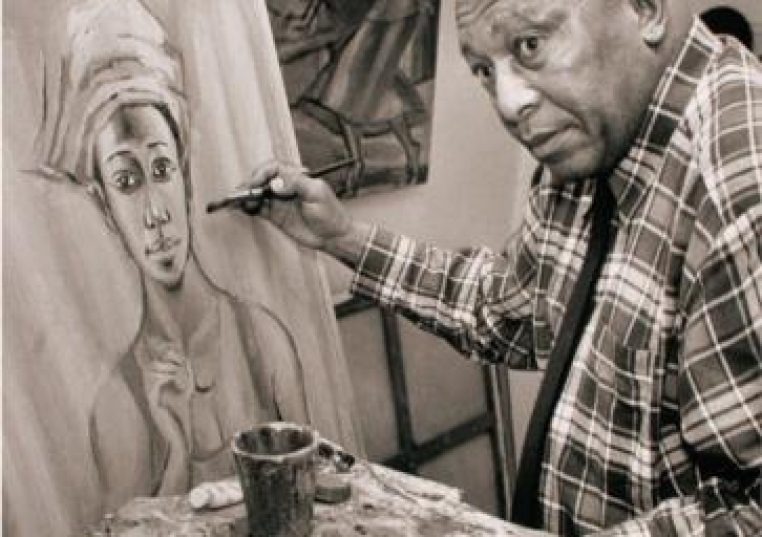
Gerard Sekoto (1913-1993) was a pioneering South African artist and musician known for his contributions to urban black art and social realism. Born in Botshabelo, he grew up immersed in music due to his father’s role in the Lutheran Mission Station. Sekoto’s artistic talent emerged in his teens, influenced by drawing classes at the Diocesan Teachers Training College in Pietersburg. Despite initially working as a teacher, Sekoto harbored a passion for art, often sharing his work only with close friends. In 1938, he ventured to Johannesburg to pursue art professionally. His first solo exhibition in 1939 marked a significant milestone, and in 1940, one of his pieces entered the Johannesburg Art Gallery collection, a groundbreaking achievement for a black artist. In 1947, Sekoto left South Africa for Paris, embarking on a self-imposed exile. Initially struggling, he supported himself as a pianist at a nightclub. Music became his means of sustenance while attending art school. His compositions were published, and he composed numerous poignant songs reflecting the challenges of exile. Sekoto’s art evolved politically in the 1970s, responding to the apartheid regime. In 1989, he received a retrospective exhibition at the Johannesburg Art Gallery and an honorary doctorate from the University of Witwatersrand. He passed away in 1993 in a retirement home outside Paris. Sekoto’s influence on South African art is profound, particularly in his portrayal of urban black life. During his Paris exile, he documented his experiences through drawings and black-and-white photographs, providing a unique perspective on his life and surroundings.

News / Ranking / Titbits / Awards

notable artworks by Gerard Sekoto: “Song of the Pick” (1946), “Yellow Houses” (1947), “District Six” (1948), “Homage to Steve Biko” (1979), “Mother and Child” (1959), “Paris Landscape” (1956), “The Initiate” (1947), “Singer with Guitar” (1947), “Children Dancing” (1974), “Red Blanket” (1964), “Street Scene, Paris” (1959), “The Blue Donkey” (1977), “Two Women” (1957), “Paris Street Scene” (1959), “Bassline” (1976), “Three Women” (1958), “Interior with Red Blanket” (1963), “Woman at the Window” (1956), “Paris Rooftops” (1969), “Composition with Figures” (1954)

Interested in this talent?

Get in touch with us to help you get started

OurĀ Partner and Supporter

Together, we're building a legacy of inspiration and opportunity.