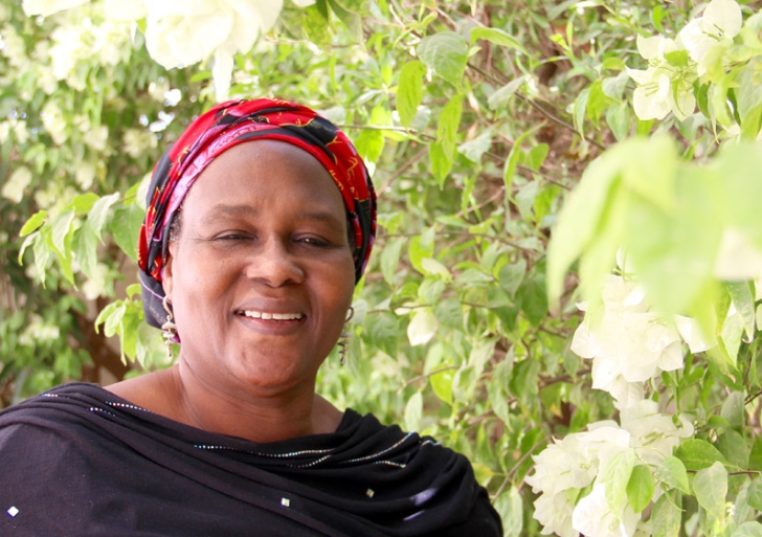
Balaraba Ramat Yakubu was born and raised in Kano, Nigeria in 1958. At the time Balaraba was growing up, it was the norm that young girls and women would not be educated. “According to a National Literacy Survey from 2010, almost half of the women in northern Nigeria cannot read or write in any language” (Zeijl). Balaraba Ramat Yakubu’s mother sent her to primary school in secret and when her father found out, he arranged a marriage for her, at age 13, to marry a 40 year old man. It was common for girls to be married off at a young age. Today it is less common that women marry before the age of 16. After a few years of marriage and poor treatment from her husband, Yakubu was sent back to her fathers house in disgrace, for her husband thought she was too childish to be a wife. Following her first marriage, Balaraba convinced her father to let her go to sewing and knitting school, but in secret she was actually going to learn to read and write in Hausa. Her mother was the only one who knew and helped Balaraba cover when her father asked where she was. She also sewed many baby dresses to make sure her father was not suspicious. At the age of 15, her father found her primary school diploma in her backpack and arranged for her to get married once again to an older man (Zeijl). This time she thought she was ready for marriage, but ended up being too educated and independent to be a submissive, obedient wife. She would read newspapers and had a better understanding of how she should be treated ((Abrams). In this second marriage, Balaraba had her first child, but due to her independence and incapability of being a submissive wife, she was sent back to her parents again after 3 years. This time her father finally agreed to allow Balaraba to get an education, so she went back to school and found her love for writing. While many people describe her as a feminist writer, in an interview with Akintayo Abodunrin, Yakubu calls herself a half-humanist and half-feminist author (Abodunrin). In her Soyayya Novels, or Love Literature, she challenges social norms by writing honestly about the unfair treatment of women in northern Nigeria. She writes about rape, polygamy, and violence. Yakubu said “When I write, I feel lifted. I grew up with a strong father whom I could not confront. My books gave me a window to express myself. I write my stories as if I was in your house, or at your neighbours’. Women recognise them. I feel I have an obligation to society to tell those stories that otherwise would not have been told” (Zeijl). She has translated one of her novels and is working on translating two more, which I believe Dr. McCain is a part of. She has also turned one of her novels into a film and written many other scripts. The first female-written Hausa novel translated into English was Yakubu’s Sin is a Puppy that Follows You Home, which we read in Dr. McCain’s African Literature class. In the past, she has taught young girls how to read and write in Hausa at the Kano State Agency for Mass Education and remains passionate about the education of women. Yakubu also feels hopeful for women in the future as more become educated. She said, “When I was fighting, I did so with passion because I lacked an education. But the young women today will fight with knowledge” (Zeijl). She founded a women’s writing association in Kano, which now has over 200 members. This is a dramatic improvement because she began as the only known female author in Kano. Today she works in Trauma Counseling and feels that the trauma she has experienced in the past helps her when working with trauma-victims (Zeijl). Balaraba Ramat Yakubu broke social norms and chose to persevere through oppression and hardship, leading to her own success and a break-through in Nigerian culture. Yakubu encourages and inspires young women to fight for their own futures by educating themselves. Yakubu could no longer stand to submit to unfair treatment as soon as her eyes were opened through education. She is a symbol for women all over the world who do not understand they deserve equal treatment. Women like Yakubu serve as major catalysts towards cultivating a more just world.